 BrokerDiscount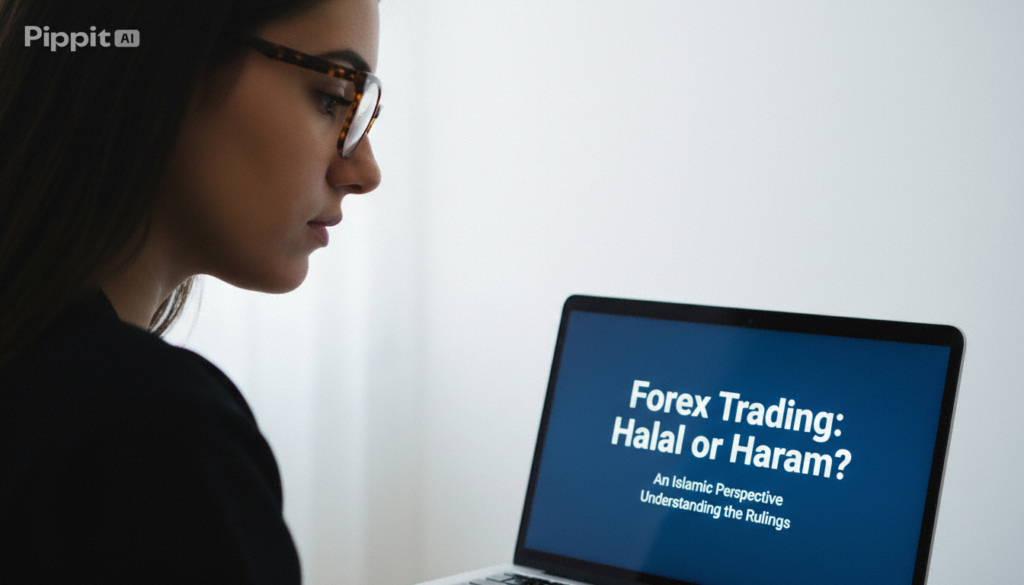
The question “Is Forex trading halal or haram?” is one of the most frequently asked topics among Muslim traders. The answer is not always simple, because it depends on how trading is conducted and whether it complies with Islamic finance principles.
This guide explains the key factors in a clear and neutral way.
What does Halal and Haram mean in Trading?
In Islamic finance:
- Halal = permissible under Islamic law
- Haram = prohibited
Trading itself is not automatically haram. However, certain elements in financial markets may violate Islamic principles.
Key Islamic Principles in Finance.
Forex trading is generally evaluated based on three main principles:
1. No Riba (Interest).
Earning or paying interest is prohibited.
In Forex trading, this mainly relates to:
- Swap fees (overnight interest)
👉 This is why many brokers offer Islamic (swap-free) accounts.
2. No Gharar (Excessive Uncertainty).
Transactions should not involve extreme uncertainty or ambiguity.
High-risk speculation without clear understanding may fall into this category.
3. No Maysir (Gambling).
Trading should not resemble gambling.
If trading is based purely on luck rather than analysis and strategy, it may be considered haram.
Is Forex Trading Halal in Practice?
Forex trading can be considered halal under certain conditions:
✔ No interest (swap-free account)
✔ Real trading (no fake price manipulation)
✔ Clear strategy and risk management
✔ No excessive speculation
However, it may be considered haram if:
❌ Interest (riba) is involved
❌ Trading is purely speculative or random
❌ The broker structure is unclear or deceptive
❌ The activity resembles gambling
What is an Islamic (Swap-Free) Trading Account?
Many brokers offer Islamic accounts designed for Muslim traders.
These accounts:
- Remove overnight swap fees
- Avoid interest-based charges
- Sometimes include alternative fixed fees
👉 Important: Always check if the broker replaces swaps with hidden costs.
Different Scholarly Opinions.
Islamic scholars have different views on Forex trading:
- Some consider it permissible under strict conditions
- Others view modern Forex trading as problematic due to leverage and speculation
There is no single universal ruling — interpretations may vary.
How to trade more responsibly (From an Islamic Perspective).
If you want to align trading with Islamic principles:
- Use a swap-free account
- Avoid excessive leverage
- Trade with a clear strategy
- Focus on risk management
- Choose transparent and regulated brokers
Final Thoughts:
Forex trading is not automatically halal or haram.
Its permissibility depends on:
- How you trade
- Which broker you use
- Whether interest and speculation are involved
👉 Traders should educate themselves carefully and, if needed, consult a qualified Islamic scholar for personal guidance.
Check out our website https://brokerdiscount24.com/broker-deals/ to find the right deal for you.